
Standard Telemetry vs. Advanced Telemetry
Telemetry is the backbone of modern fleet management, vehicle security, and asset tracking. It enables the remote collection and transmission of data from a GPS device to a centralized server. However, not all telemetry systems offer the same level of performance, resilience, or intelligence. Understanding the differences between standard and advanced telemetry solutions is essential for informed decision-making.
1. Standard Telemetry
Definition
Standard telemetry refers to a basic GPS tracking system that collects location and vehicle data and transmits it to a remote server using a single mobile network. These systems are widely used for general tracking and fleet visibility.
Key Features
Real-time GPS location tracking
Route history and trip reports
Speed monitoring and alerts
Geofencing capabilities
Remote access via web or mobile applications
Ignition status and movement notifications
Benefits
Cost-Effective: Affordable and suitable for individuals and small fleets.
Ease of Deployment: Simple installation and straightforward operation.
Improved Asset Visibility: Enables tracking of vehicles and mobile assets in real time.
Operational Efficiency: Supports route planning and basic fleet management.
Theft Deterrence: Assists in locating stolen vehicles.
Data-Driven Decisions: Provides fundamental analytics for performance monitoring.
Disadvantages
Single Network Dependency: Vulnerable to signal loss in low-coverage areas.
Limited Resilience: Tracking may fail if connectivity is disrupted.
Susceptibility to Jamming: Basic systems lack countermeasures against signal interference.
Delayed Data Transmission: Gaps may occur in areas with poor mobile service.
Minimal Security Capabilities: Typically lacks proactive recovery features.
Limited Intelligence: Provides data but not advanced insights or predictive analytics.
No Tactical Integration: Relies on third-party agencies for response.
2. Advanced Telemetry
Definition
Advanced telemetry represents a next-generation GPS tracking solution designed for high-risk environments and mission-critical operations. It integrates intelligent connectivity, anti-interference technologies, and behavioral analytics to enhance security, reliability, and operational efficiency.
Key Features
SIMBoost: Optimizes and manages connectivity in real time to maintain stable communication.
Multi-Operator Connectivity: Automatically selects the strongest available mobile network.
Countermeasures: Detects and responds to GPS jamming and signal interference.
AeroLock: Enhances precision tracking and enables drone-assisted recovery operations.
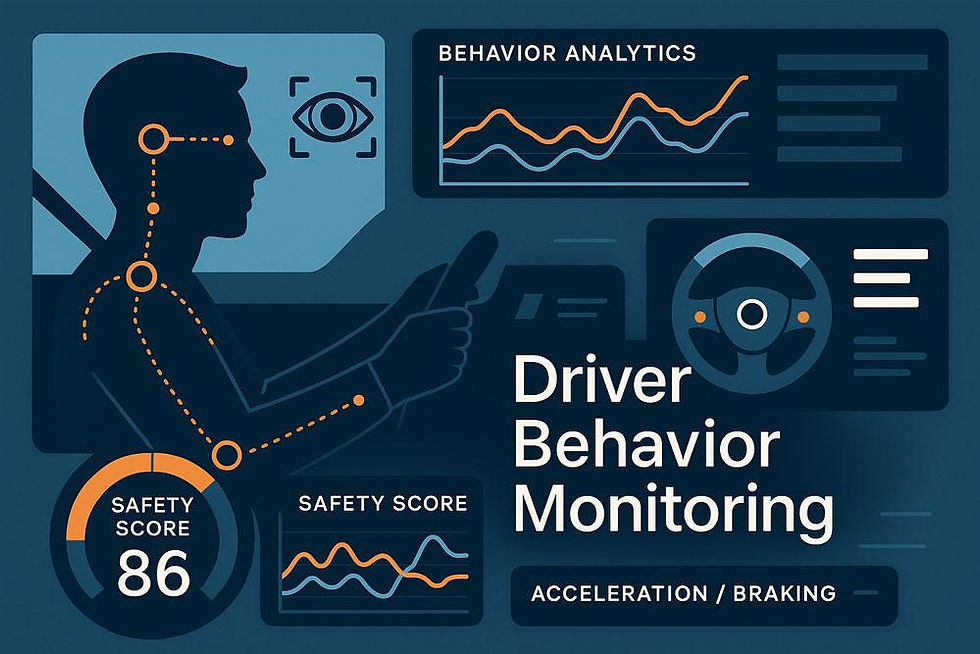
Driver Behavior Monitoring: Tracks driving patterns such as harsh braking, rapid acceleration, speeding, and idling.
Advanced Alerts: Provides real-time intelligence and anomaly detection.
Geofencing and Movement Analytics: Enables proactive risk management.
Secure Data Transmission: Ensures integrity and confidentiality of sensitive information.
Cloud-Based Reporting: Delivers comprehensive analytics and dashboards.
Benefits
Enhanced Reliability: Maintains connectivity even in challenging environments.
Improved Theft Recovery: Supports rapid and coordinated response capabilities.
Reduced Downtime: Minimizes data gaps through intelligent network management.
Operational Efficiency: Enables predictive maintenance and optimized fleet utilization.
Driver Safety and Accountability: Encourages responsible driving and reduces accident risks.
Lower Operational Costs: Improves fuel efficiency and reduces maintenance expenses.
Regulatory and ESG Compliance: Provides emissions, usage, and sustainability metrics.
Risk Mitigation: Detects suspicious activity and supports proactive intervention.
Situational Awareness: Offers real-time intelligence for decision-makers.
Scalability: Suitable for enterprise, government, and high-security applications.
Disadvantages
Higher Initial Investment: More expensive due to advanced technology and capabilities.
Training Requirements: Users may require onboarding to maximize system benefits.
Complex Implementation: May require professional installation and configuration.
Ongoing Management: Advanced analytics demand oversight for optimal performance.
3. Comparative Overview
Feature | Standard Telemetry | Advanced Telemetry |
Connectivity | Single mobile network | Multi-operator with SIMBoost |
Data Transmission | Basic GPS tracking | Intelligent, resilient, and secure |
Jamming Detection | Not available | Integrated countermeasures |
Signal Optimization | Limited | Real-time optimization |
Theft Recovery Support | Reactive | Proactive and intelligence-driven |
Drone Integration | Not available | Enabled via AeroLock |
Driver Behavior Monitoring | Limited or absent | Comprehensive analytics |
Reliability | Moderate | High |
Security | Basic | Enterprise-grade |
Fleet Intelligence | Basic reports | Predictive and actionable insights |
ESG and Compliance Reporting | Limited | Comprehensive |
Ideal Users | Individuals and small fleets | Corporations, governments, and high-risk sectors |
Conclusion
Standard Telemetry provides essential tracking capabilities suitable for everyday fleet management and personal vehicle monitoring. It is a practical and economical solution for organizations seeking basic visibility and control.
Advanced Telemetry, by contrast, delivers a resilient, intelligent, and security-driven ecosystem. With innovations such as SIMBoost, countermeasures, AeroLock, and driver behavior monitoring, it transforms raw data into actionable intelligence. This makes it the preferred solution for mission-critical operations, high-value assets, and organizations that demand reliability, rapid response, and strategic insights.


Comments